
Love, Beyond Language: My Ketamine-Assisted Therapy Experience in Vancouver

Love, Beyond Language: My Ketamine-Assisted Therapy Experience in Vancouver
As Valentine’s Day approaches, love tends to be packaged neatly into romance, roses, and a single word meant to hold an entire universe. This year, I find myself wanting to tell a different story. One that is deeply personal, a little vulnerable, and profoundly expansive.
I was lucky enough to participate in the Ketamine-Assisted Therapy program at Qi Integrated Health, as part of their first ever cohort: a thoughtfully structured medicine-assisted therapy journey that included one preparation session, two medicine journeys, and two integration sessions. I went in curious, open, and clinically informed. I did not expect what would unfold.
The First Ketamine Journey: Processing Grief
My first session was dark, almost macabre. It was heavy with grief. It was the kind of grief that lives in the body long after the mind thinks it has moved on. I recall the awareness that my body was sobbing, crying, despite not being “in my body”, but rather traversing the depth of my psyche. I recall folding inward on myself, as The Observer of myself. Then proceeding to feel, process, and experience the sorrow inside me that was ready to be uncovered.
It wasn’t pleasant, and it wasn’t meant to be. But it was honest. It felt like being shown a truth that had been patiently waiting: grief needs to be witnessed before anything else can grow. That session felt like clearing ground, necessary, uncomfortable, and strangely reverent.
The Second Ketamine Journey: Experiencing Love Beyond Language
The second session was the most beautiful experience of my life.
And even as I write that sentence, I can feel the same frustration I felt when I came out of the journey, because it sounds corny. Cliché. Cheesy. Like something people might politely nod at, or quietly dismiss. It risks being dismissed as sentimental or exaggerated. Not because it isn’t true, but because our language simply isn’t built to hold what I experienced.
English gives us one word—love—for something that exists in infinite forms.
In that space, love wasn’t an idea or a sentiment. It wasn’t romanticized or abstract. It was lived, embodied, unmistakably real. And what struck me most was not just the intensity of love, but its extraordinary diversity.
I had the immense privilege of experiencing every kind of love there is:
The love you feel for your mother.
The love you feel for your dog.
The love you feel for peanut butter.
The love for a romantic partner.
The love for past romantic partners who shaped you.
The love for close friends, each one distinct.
The love for a group of friends as a collective.
The love for a stranger.
The love for your inner child.
The love for yourself, without conditions.
Loving your dog is not the same as loving your mother. Loving peanut butter is not the same as loving your partner. Loving one best friend is not the same as loving another, even if neither is more important than the other. Each relationship creates a unique resonance in your nervous system. A different felt sense and quality of connection. A different expression of love.
And yet, in English, we flatten all of that into one single word.
I remember thinking about how the Greek language at least attempts more nuance. They have seven words for love—agape, philia, eros, storge, ludus, pragma, and philautia—distinguishing between divine love, friendship, romantic desire, familial love, flirtation, practical love, love of self, even compulsive or obsessive love. And I remember thinking, okay… at least they’ve got seven words.
But even seven words fall impossibly short.
These categories still imply separateness, when in reality love expresses itself through endless combinations shaped by who the other person is, your history with them, your nervous system state at any given moment, timing, context, safety, and presence.
Greek at least acknowledges that love is not one thing. But my experience revealed something deeper: love is an infinite field of relational states.
The Role of Love and Connection in Nervous System Regulation
What became strikingly clear was that love is not something humans merely experience; it is something we are biologically organized around. Connection is not a luxury or an abstract ideal; it is essential to human health. Our nervous systems develop in relationship, regulate in relationship, and heal in relationship. Love, in its many forms, is the primary condition that allows the system to settle, integrate, and expand capacity.
Love revealed itself not as softness, but as structure. As the organizing principle behind attachment, motivation, meaning, and behavior. When you strip things down far enough, so much of what drives human behavior—our striving, our fear, our defenses, our longing—can be traced back to the need for connection. To be seen. To belong. To matter.
In that space, love didn’t feel idealized. It felt necessary. As essential to life as oxygen, nourishment, and rest. Not something we earn or perform, but something inherent to the human experience, woven into our biology, our psychology, and our capacity to heal.
How Ketamine Creates a Window for Emotional Healing
Ketamine’s unique therapeutic value lies in its ability to temporarily alter the brain and nervous system’s usual operating rules. At a neurobiological level, ketamine is thought to reduce activity in rigid, overlearned networks, particularly those involved in threat detection, rumination, and self-referential looping. These are the same networks that become chronically reinforced in trauma, depression, anxiety, and attachment injury.
At the same time, ketamine has been shown in research to increase markers of neuroplasticity. It may enhance synaptic flexibility and support the brain’s ability to form new connections more easily. In simple terms, it can create a window of opportunity; a period where the brain is less constrained by past patterning and more capable of taking in new information.
From a nervous system perspective, this combination can be profound.
The system may no longer be working as hard to scan for threats, rejection, or abandonment. And when that happens, the organism may be able to access states that are otherwise blocked, not because they don’t exist, but because they’re usually inaccessible under chronic protection.
Ketamine doesn’t manufacture love, but it may help reduce the barriers that usually prevent the nervous system from fully receiving it.
Importantly, this window is considered temporary, which is why preparation and integration matter so deeply.
The medicine opens the door, but it is the relational container, i.e. the prep session, the therapeutic presence, and the integration work, that helps translate these states into lasting change. Without integration, the experience may risk becoming simply a peak moment. With integration, it can become reorganized, woven into the fabric of our being, second nature in our newest adapted version of self.
What stayed with me was the clarity that love and connection are not abstract ideals or spiritual aspirations; they are widely recognized as neurobiological necessities. When the nervous system is given the right conditions —safety, reduced defense, and increased plasticity—it tends to move toward connection and growth.
Ketamine didn’t teach me something new; it allowed my system to remember something essential long enough for it to matter.
Why Integration Matters in Ketamine-Assisted Therapy
The integration sessions were where meaning took form. We explored how to bring that expansiveness into everyday life in our relationships, boundaries, self-compassion, and presence. Ketamine-assisted therapy isn’t about chasing peak experiences; it’s about allowing those experiences to reorganize how you live, relate, and care for yourself.
The Ketamine-Assisted Therapy program at Qi Integrated Health felt safe, intentional, and deeply respectful of both the medicine and the human nervous system. The preparation mattered. The integration mattered. The container mattered.
A Valentine’s Reflection on Love, Healing, and Connection
This Valentine’s Day, I’m less interested in celebrating love as something we find in another person, and more interested in love as something we remember. Something that already exists in infinite forms, waiting to be experienced, named (or not named), and embodied.
If you’re curious about Ketamine-assisted therapy, know this: it’s not about forcing insight or manufacturing bliss. Sometimes it begins in grief. Sometimes it opens into beauty beyond words. And often, it reminds us of truths we already knew before language tried to simplify them.
There is more I could say. There always will be.
But for now, this feels like a beginning.
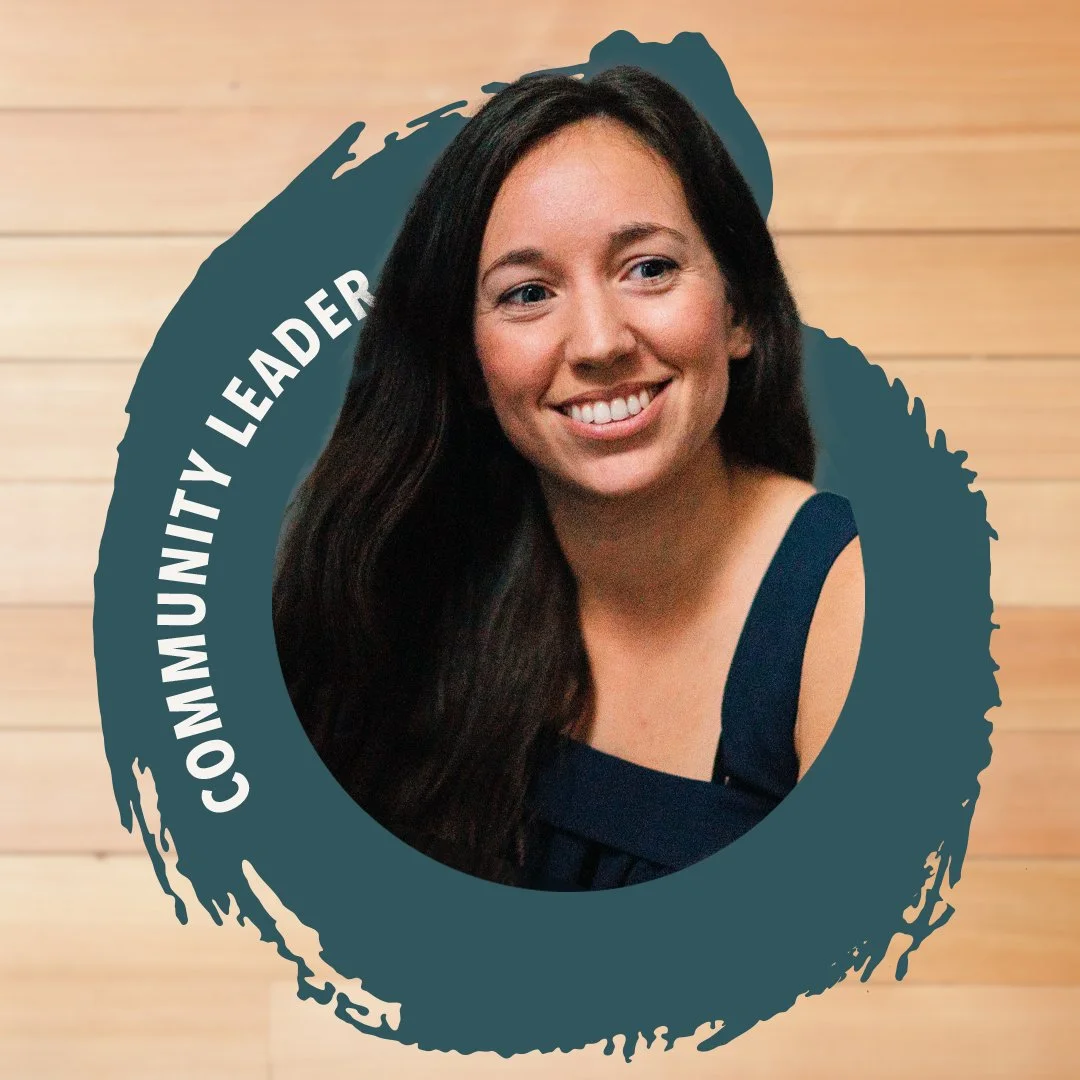
Meet Dr. Sam
Dr. Samantha Petrin, ND, focuses on gut health and mental well-being, helping patients heal from anxiety, PTSD, and nervous system dysregulation. With a focus on somatic-based therapies, she integrates Craniosacral Therapy, Breathwork, acupuncture, and botanical medicine to support the body’s innate ability to heal. Her compassionate approach creates a safe space for deep healing and resilience.
